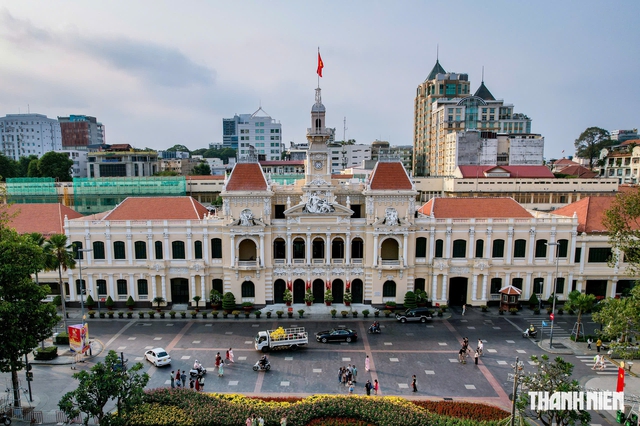
City Departments
The People’s Committee of Ho Chi Minh City is consulting on a draft decision that establishes a uniform framework for the number of deputy‑level posts in its specialized agencies, administrative organisations and public service units. Under the proposal, each city department (sở) will have an average of six deputy directors, with the exact count for each department to be set by the city chairman.
Internal Divisions
For internal divisions (phòng) within a department, the number of deputy heads is tied to the size of the civil‑service staff: one deputy for fewer than 10 staff; up to two for 10‑14; up to three for 15‑19; up to four for 20‑29; and for 30 or more staff, an additional deputy is added for every ten extra staff, capped at six.
Sub‑Bureaus
Sub‑bureaus (chi cục) with one to three subordinate rooms may appoint two deputies, while those with no rooms or four and more rooms may have up to three.
Commune Level
At the commune level, the draft sets an average of three deputies per room, with the commune chairman deciding the precise numbers.
Public Service Entities
Public service entities are also regulated. Fully self‑financing units may have up to three deputies; those partially self‑financing or funded by the state are limited to three, with an extra deputy allowed for organisations employing 200 or more staff, subject to city approval. Units under a department or commune with up to 20 staff may have no more than two deputies, and those with more than 20 staff may have up to three. Hospitals of grade 1 or higher, provincial disease‑control agencies of grade 1 or higher, and schools with 40 or more classes are likewise capped at three deputies.
Transition Period and Limits
The draft provides a five‑year transition period for agencies currently exceeding the new limits and proposes a maximum of 18 city departments. It aims to operationalise point 2 of article 6 of the Urban Development Law, clarifying the city’s authority over deputy‑level staffing.