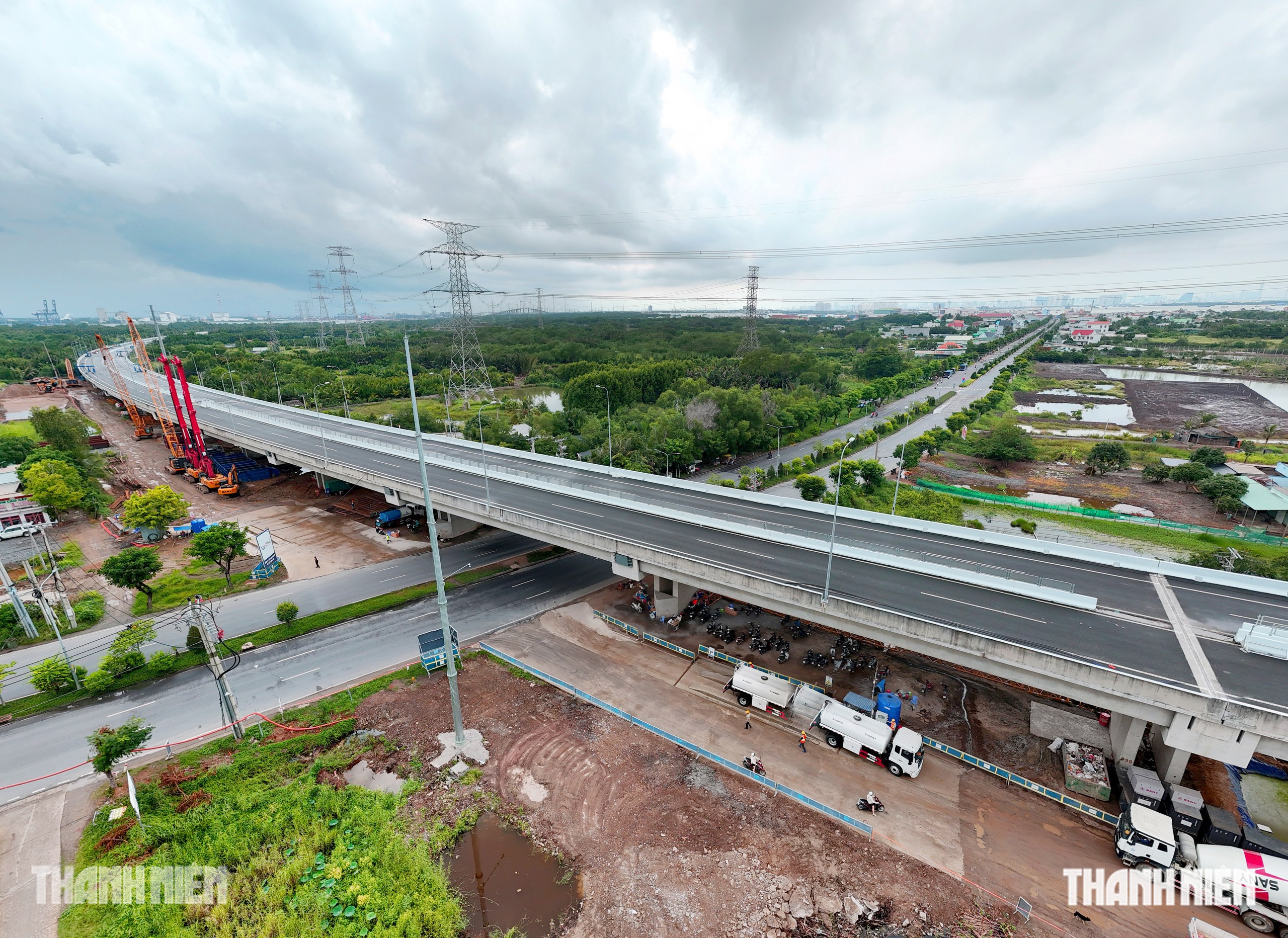
Rung Sac Interchange Breaks Ground
Rung Sac interchange, a multi‑level traffic node linking the Ben Luc‑Long Thanh expressway with the Rung Sac road, broke ground on 1 July 2026 in Binh Khanh commune, Ho Chi Minh City. Backed by a total investment of 2.969 trillion VND (about US$130 billion), the project allocates 994 billion VND for compensation, support and resettlement, 1.568 trillion VND for construction, with the balance covering equipment, project management and contingencies.
Designed to meet standards comparable to recent Singapore and South Korean infrastructure, the interchange will feature a complex of overpasses, two 470‑metre twin tunnels, an island interchange and widened existing viaducts to accommodate the second phase of the Ben Luc‑Long Thanh highway. Two dedicated branches are planned: a six‑lane, 80 km/h link from the Can Gio approach to Rung Sac, and a four‑lane, 60 km/h connection to the Binh Khanh ferry terminal.
Construction Accelerated in Early September 2026
Construction accelerated in early September 2026, with earth‑moving equipment, excavators and dozens of workers clearing the site, building service roads and laying the first foundations while parallel compensation and land‑acquisition processes continue. On 4 September, local authorities held a public hearing on the draft compensation and resettlement plan for affected households.
Completion Slated for 2028
Upon completion, slated for 2028, the interchange will eliminate the current single‑road dependency for Can Gio, shorten travel times, and integrate the district into the regional highway network. It also paves the way for future strategic projects such as the Can Gio bridge, a high‑speed metro line, and broader coastal urban development aimed at transforming the southern fringe of Ho Chi Minh City into a modern maritime city.