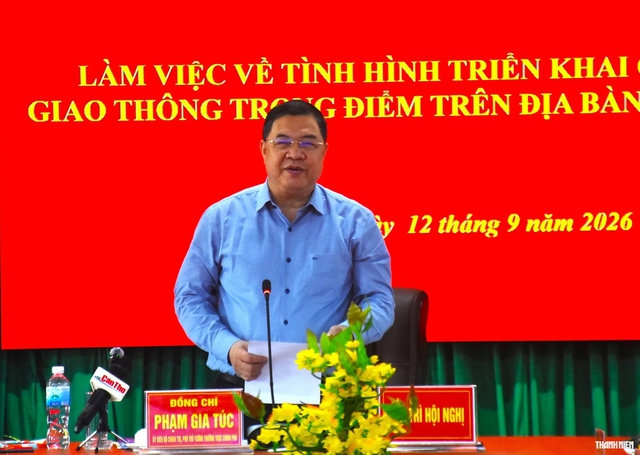
On 12 September, Deputy Prime Minister Pham Gia Tuc led a delegation to Cà Mau province to review the progress of two key transport projects: the Cà Mau‑Đất Mũi highway and the road‑bridge link to Hòn Khoai island. Together the projects represent an investment of about VND 84 trillion. The 82‑km highway, part of a broader 600‑km Mekong Delta expressway network, has so far achieved roughly 8 % of its total work, with a construction force of 2,500‑3,000 workers maintained on site.
The visit highlighted severe material constraints. The highway and the marine bridge require 3.5 million m³ of river sand, but only 1 million m³ has been supplied, leaving a shortfall of 2.5 million m³. Stone needs total 4.5 million m³; about 3 million m³ of aggregate has arrived from Ho Chi Minh City and Đồng Nai, yet 1.5 million m³ of high‑strength stone—primarily sourced from An Giang province—remains lacking. Contractors have asked An Giang to boost reserves and extraction capacity and, if domestic supply falls short, to explore imports from Cambodia.
Geotechnical challenges also loom. Weak soil conditions affect roughly 22 km of the route, currently treated with permeable piles. Builders propose switching to cement‑soil piles, a change that would not raise overall costs and is expected to keep the highway on track for completion by the end of 2028. The Hòn Khoai bridge and dual‑use port are slated for 2029.
Pham Gia Tuc urged Cà Mau authorities to coordinate closely with investors and contractors, expand labor and equipment, adopt a "three‑shift, four‑team" schedule, and apply technical measures to shorten settlement periods while prioritising quality. He stressed prompt reporting of any obstacles to prevent bottlenecks that could jeopardise the projects' timelines.