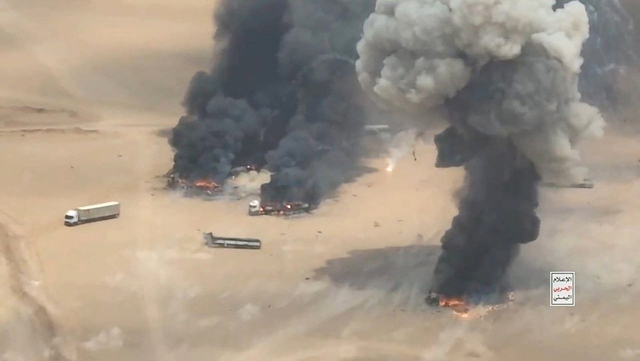
On Sept. 14, Houthi spokesperson Yahya Saree announced a major military operation against Saudi Arabia, striking the King Khalid air base in Khamis Mushait. The raid targeted a fighter‑jet hangar, radar installations, runway, ammunition depot and other facilities, which Saree said caused “significant losses” for the Saudi forces. Photographs released on Sept. 7 showed a ballistic missile hitting trucks carrying military equipment bound for the Al‑Wadiah base in Yemen’s Hadhramaut province. Saudi civil‑defence authorities issued short alerts for Khamis Mushait and nearby Abha, and a resident reported loud explosions and prolonged fires that kept locals awake.
Saree accused Saudi Arabia of conducting more than 300 airstrikes on Yemen over the previous five days, launched from Khamis Mushait and Taif air bases, though Riyadh has not yet responded publicly. The attacks come as the Yemeni government, backed by Saudi forces, intensified its own offensive along the Red Sea, pledging additional troops after a “painful” setback when Houthi fighters captured the port city of Mokha and Perim (Mayyun) island in the Bab al‑Mandab strait.
Houthi drones and missiles have also hit Saudi cities Abha and Khamis Mushait, and a recent strike forced the shutdown of Saudi Arabia’s East‑West oil pipeline, a critical route now more vital as Iran’s actions have constrained the Hormuz Strait.
In Washington, President Donald Trump, visiting Ireland on Sept. 12, said the Houthis had contacted the United States but did not wish to fight it, and he declined Saudi Crown Prince Mohammed bin Salman’s request for U.S. strikes. U.S. officials indicated the focus remains on Iran and the Hormuz corridor, while analysts warn Houthi control of Perim could give them leverage over the Bab al‑Mandab gateway, further threatening Saudi oil exports.